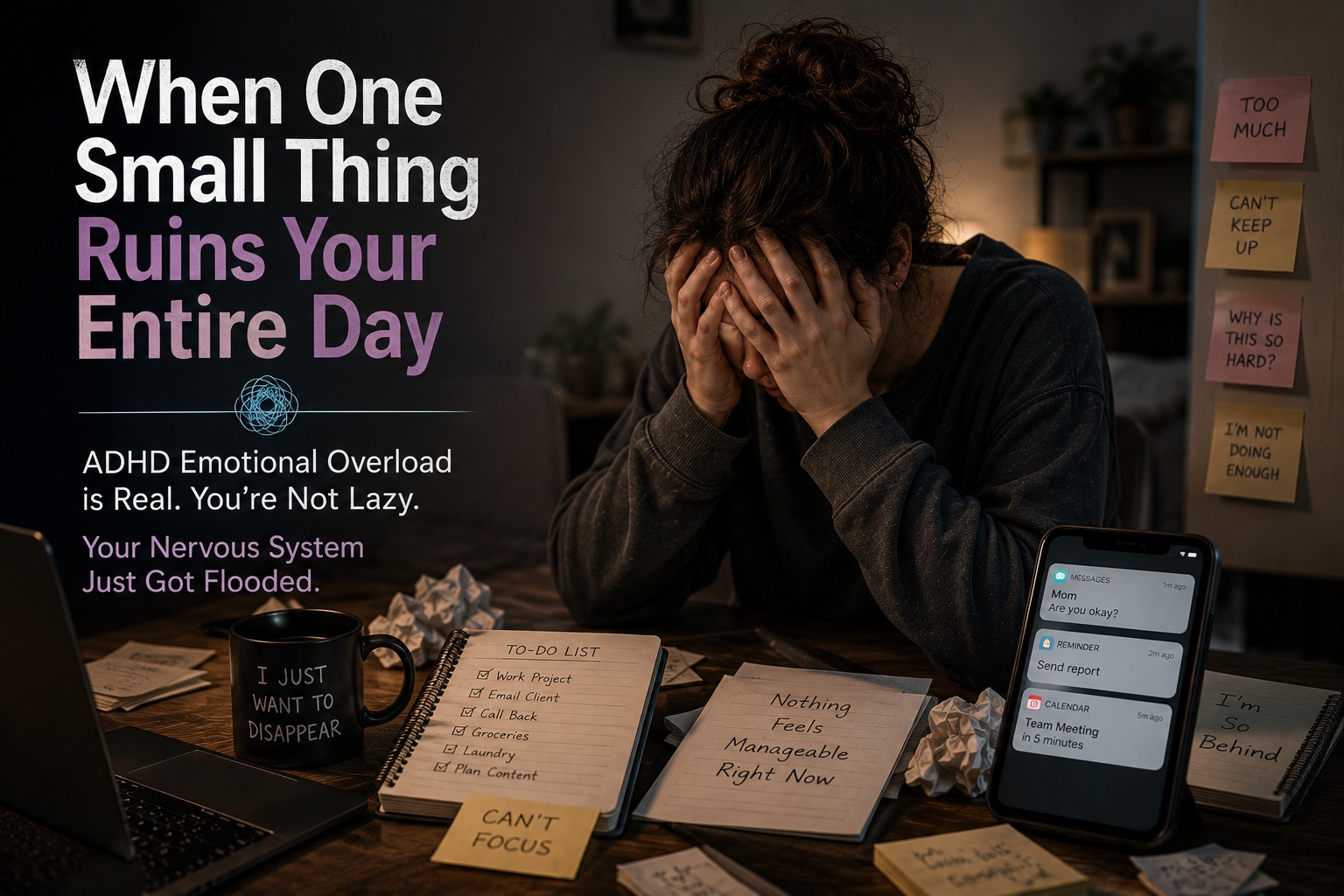
Why You Can Focus on Games for Hours but Not Important Work
This confuses a lot of people with ADHD.
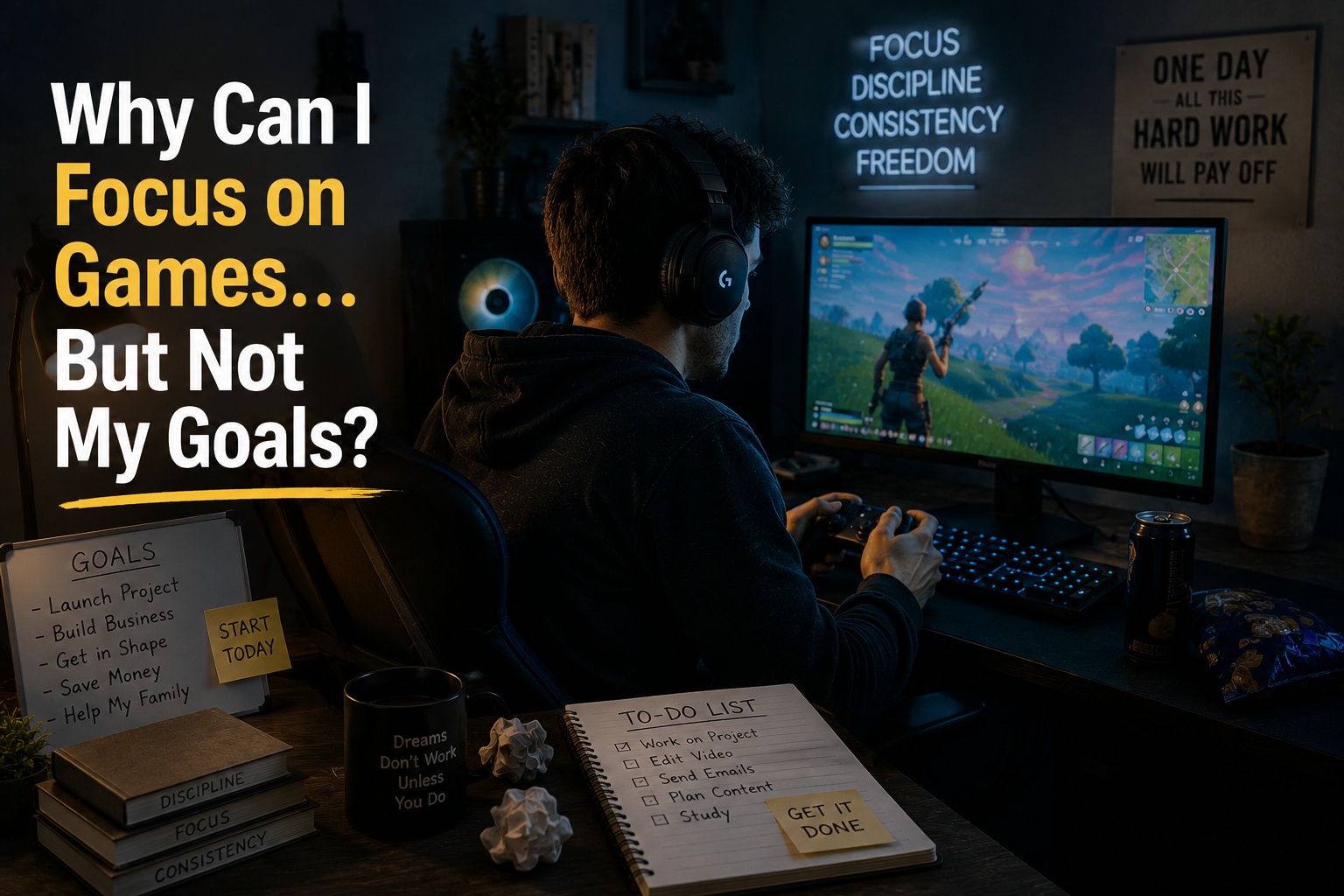
You can spend hours gaming, scrolling, researching random topics, or watching videos…
But the moment you open an important task, your brain suddenly feels exhausted.
Then the guilt starts:
“If I can focus on games… why can’t I focus on work?”
The Problem Is Not Intelligence or Laziness
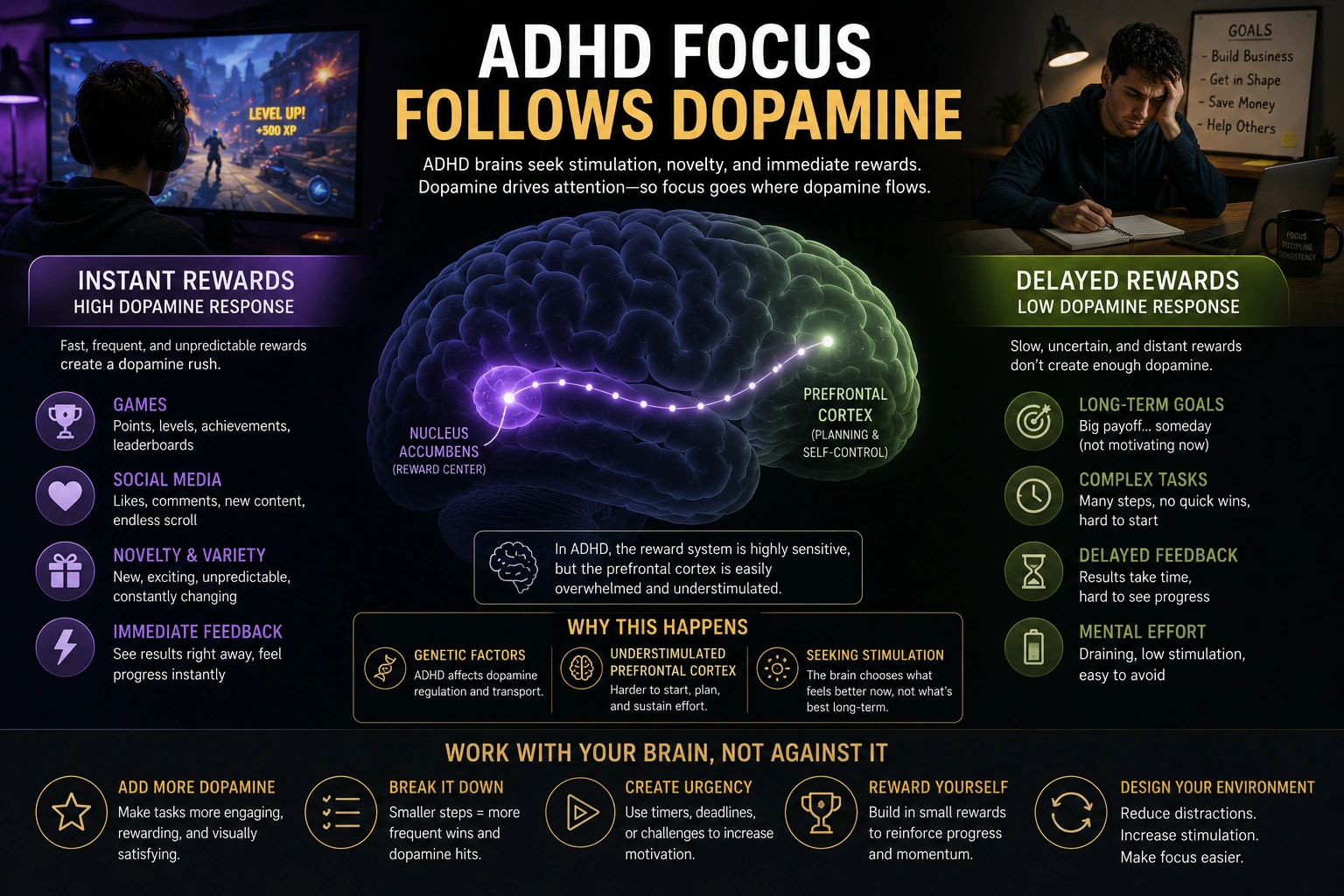
ADHD brains often struggle with regulating attention, not creating attention.
That means focus is usually driven by:
- Interest
- Novelty
- Urgency
- Stimulation
- Immediate rewards
Games are built around dopamine.
Many work tasks are not.
So your brain naturally moves toward the easier source of stimulation.
Why Important Tasks Feel So Much Harder
Important work usually contains:
- Delayed rewards
- Unclear outcomes
- Mental effort
- Fear of failure
- Perfection pressure
Your brain sees that as friction.
And friction creates avoidance.
This is why many ADHD adults procrastinate on meaningful goals while hyperfocusing on stimulating distractions.
Playbook: Make Focus Easier for an ADHD Brain
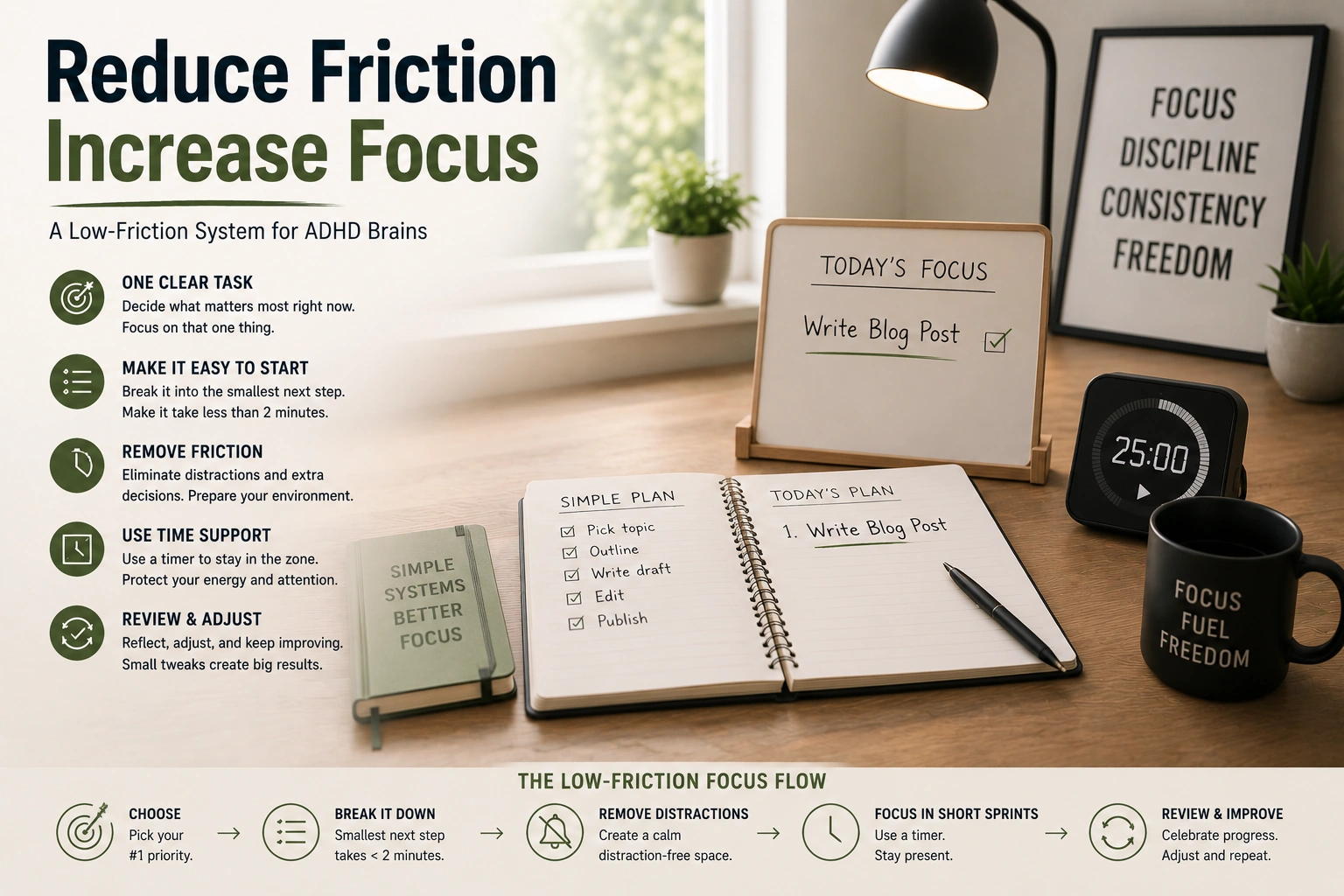
Goal
Reduce resistance and increase follow-through.
Step 1 — Lower the starting pressure
Do not think about finishing. Focus only on beginning.
Step 2 — Add visible progress
Small wins create dopamine and momentum.
Step 3 — Remove distractions before starting
ADHD brains are highly environment-sensitive.
Step 4 — Create short focus blocks
Your brain handles short sprints better than endless sessions.
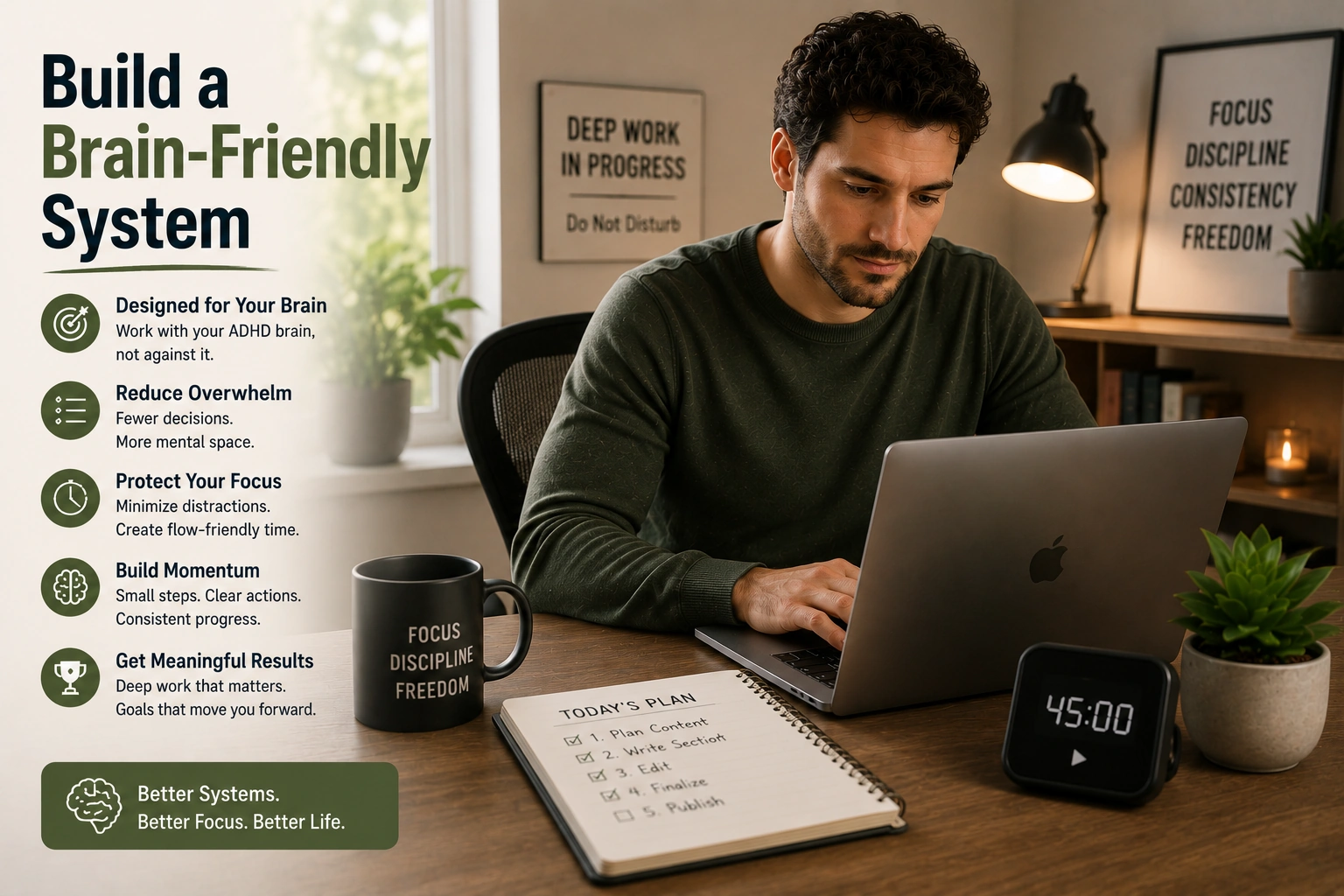
Step 5 — Build systems, not emotional motivation
A repeatable structure reduces decision fatigue and resistance.
This is why frameworks like the Build a System Book can help ADHD adults create more sustainable focus.
The Real Goal Is Not Perfect Focus
The goal is not becoming a robot.
The goal is making important work easier to start and easier to continue.
That changes productivity completely.
FAQ
Why can ADHD people focus on games but not work?
Because games provide fast dopamine rewards, stimulation, novelty, and immediate feedback, which ADHD brains respond to strongly.
Is this laziness?
No. ADHD affects attention regulation and executive function, not intelligence or care.
How do systems help ADHD focus?
Systems reduce friction, simplify starting, and create repeatable structures that lower resistance.
Final Thoughts
Stop asking:
“Why am I lazy?”
Start asking:
“How do I reduce friction for my brain?”
That shift creates less shame and more sustainable action.
If you want practical frameworks for building ADHD-friendly systems, the Build a System Book offers simple strategies designed to reduce overwhelm and improve follow-through.